The Artist's Paint Palette: A Symbol of Creativity and a Canvas for Embroidery
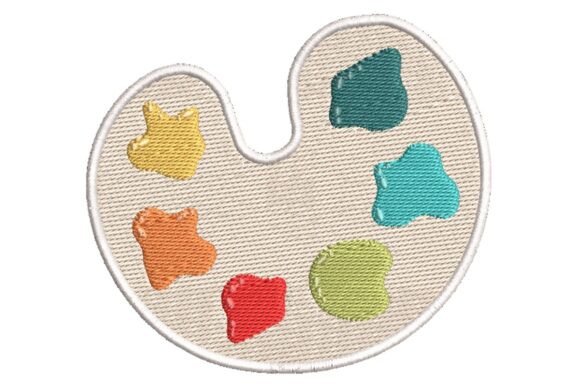
In the vibrant world of visual arts, few objects are as instantly recognizable or deeply symbolic as the artist's paint palette. It is more than just a tool; it is the command center where imagination transforms into reality. From the wooden boards held by Renaissance masters to the digital interfaces used by modern graphic designers, the palette remains a universal icon of creativity. However, this iconic image has found a new home beyond the canvas. Today, we explore the fascinating intersection of traditional art tools and textile arts through an embroidery design of a classic artist's paint palette with a thumbhole, featuring colorful dabs of yellow, orange, red, teal, light blue, and light green.
Understanding the Classic Paint Palette
To truly appreciate the embroidery design that captures this essence, one must first understand the object itself. Historically, a painter's palette is a flat surface, traditionally made of wood, bone, or ivory, designed to hold and mix paints. The most distinctive feature of the classic palette is the thumbhole located near the top edge. This simple yet ingenious innovation allows the artist to grip the board securely with their hand while keeping their fingers free to manipulate brushes.
The purpose of the palette extends far beyond mere storage. It is the workspace where color theory comes to life. Before a single stroke touches a canvas, the artist stands before their palette, blending hues to create the perfect shade of sky or the exact tone of skin. The arrangement of colors on the board often follows a specific logic, allowing for quick access and efficient mixing. In our embroidery representation, this organization is captured beautifully through distinct dabs of yellow, orange, red, teal, light blue, and light green.
- Yellow: Often representing sunlight, joy, and energy, this color sits ready to brighten any composition.
- Orange: A warm, inviting hue that bridges the gap between the warmth of red and the cheerfulness of yellow.
- Red: The color of passion, intensity, and drama, essential for creating focal points in any artwork.
- Teal: A sophisticated blend of blue and green, adding depth and a sense of calm mystery.
- Light Blue: Evoking the vastness of the sky and the tranquility of water, it brings airiness to a piece.
- Light Green: Symbolizing nature, growth, and renewal, it grounds the composition in organic beauty.
The Art of Embroidering a Palette
Translating a two-dimensional painting tool into a three-dimensional textile design requires skill and artistic vision. An embroidery design of a classic artist's paint palette is not merely a reproduction; it is an interpretation. When a designer stitches a thumbhole and various colored dabs onto fabric, they are engaging in a dialogue between two ancient crafts: painting and needlework.
The process begins with selecting the right materials. To mimic the texture of thick oil or acrylic paint, artisans often use raised embroidery techniques. By layering threads or using padded stitching, the "dabs" of paint appear to sit atop the fabric, creating a tactile experience that invites touch. The thumbhole is stitched with precision, perhaps using a satin stitch to define the curve, reminding the viewer of the human hand that once held the tool.
This form of art challenges the misconception that embroidery is only suitable for floral patterns or landscapes. Instead, it demonstrates how modern embroidery can celebrate abstract concepts and industrial objects. The inclusion of specific colors like teal and light green alongside traditional primaries shows a commitment to contemporary aesthetics, making the piece relevant to modern interior design trends.
Why Choose a Palette Design?
For those considering adding this design to their wardrobe, home decor, or educational materials, there are several compelling reasons. First, the palette is a powerful symbol of creativity and potential. Whether displayed in a classroom, a studio, or a living room, it serves as a constant reminder of the power of expression.
Secondly, the design is versatile. The color combination of yellow, orange, red, teal, light blue, and light green offers a balanced spectrum. It is neither too aggressive nor too muted, making it suitable for a wide range of contexts. For instance, a tote bag embroidered with this design becomes a statement piece for a teacher or an artist, while a wall hanging can add a splash of color to a minimalist office.
The Broader Significance in Modern Life
In our increasingly digital age, the physical act of holding a brush and mixing paint on a wooden board might seem archaic. Yet, the symbolism of the palette remains stronger than ever. We see this in the way technology companies design their user interfaces, which often utilize "palette" metaphors for color selection tools. The concept of choosing from a spectrum of options is fundamental to decision-making in business, education, and daily life.
Furthermore, the embroidery design of a classic artist's paint palette represents a bridge between generations. For older generations, it evokes memories of school art classes and the smell of turpentine. For younger generations, it connects them to the rich history of art while showcasing the enduring appeal of handmade crafts. It validates the idea that creativity is not confined to high-tech gadgets but is rooted in human ingenuity and manual dexterity.
In the realm of education, such designs are invaluable. Teachers can use images of palettes and embroidery projects to teach students about color mixing, texture, and cultural heritage. It encourages hands-on learning and helps children understand that art is a language that can be spoken through various mediums.
Clarifying Common Misunderstandings
There is a common assumption that an embroidery design of a palette is simply a decorative item without deeper meaning. However, this view overlooks the narrative embedded in the craft. Every stitch tells a story of patience, focus, and intention. The thumbhole, specifically, is a detail that speaks to the functionality of the original object. It reminds us that art is not passive; it requires active participation and physical engagement.
Another misconception is that such designs are limited to traditional settings. In reality, the fusion of a classic motif with modern thread types (like metallic or variegated threads) allows for innovative applications in fashion and branding. Companies focused on creative industries often use palette imagery in their logos and merchandise to signal their commitment to innovation and aesthetic excellence.
Practical Applications and Examples
How can you incorporate this knowledge into your own life? Here are a few practical examples:
- Home Decor: Hang a framed embroidery of a palette with light blue and teal accents above a desk to inspire productivity and creative thinking.
- Gifting: Commission a custom piece featuring the warm tones of orange and red for an artist friend, celebrating their passion and dedication.
- Educational Projects: Use the design as a template for teaching children about primary and secondary colors, explaining how mixing different dabs creates new shades.
- Fashion: Look for clothing items, such as aprons or tote bags, that feature this design, turning everyday utility into an expression of personal style.
Conclusion: A Timeless Symbol Reimagined
The artist's paint palette is a timeless symbol that transcends its physical form. It represents the boundless nature of human creativity and the joy of bringing ideas to life. Through the medium of embroidery, this symbol is reimagined, gaining new texture, depth, and emotional resonance. The depiction of a classic palette with a thumbhole and dabs of yellow, orange, red, teal, light blue, and light green is not just a picture of a tool; it is a celebration of the artistic spirit.
Whether you are a seasoned artist, a hobbyist crafter, or someone who simply appreciates the beauty of color, understanding and embracing this design enriches your appreciation of both traditional and contemporary art forms. It invites us to pick up our own tools, metaphorical or literal, and start creating something beautiful today. In a world that often moves too fast, the steady rhythm of the needle and thread, mirroring the careful mixing of paints, offers a grounding reminder to slow down and savor the creative process.