Abcd Ref Dashed Dotted Tracing: A Comprehensive Evaluation for Early Handwriting Instruction
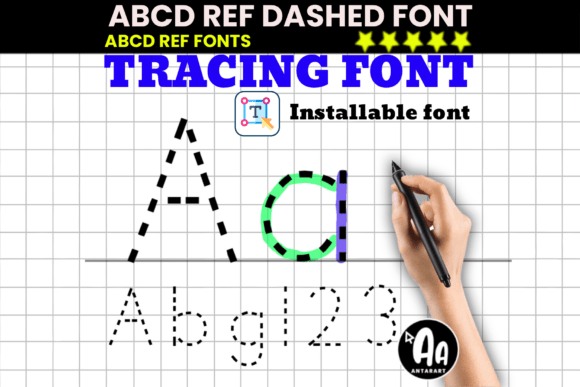
Developing legible handwriting is a foundational skill that requires consistent practice and the right visual scaffolding. Among the various resources available to educators and parents, Abcd Ref Dashed Dotted Tracing has emerged as a distinct option for letter formation. This resource utilizes a classic dot-line alphabet format, blending solid lines with dotted guides to assist young learners in mastering stroke order and spatial awareness. While many fonts exist on the market, understanding the specific mechanics and application of this font is essential for those seeking effective classroom tools or home-schooling materials.
Understanding the Mechanics of Dashed and Dotted Guides
The core distinction of Abcd Ref Dashed Dotted Tracing lies in its hybrid approach to visual guidance. Unlike traditional cursive scripts that rely solely on continuous flow, or block letters that offer no internal direction, this font incorporates both dashed and dotted elements. The dashed lines typically indicate the path of the pen, while dots often mark starting points or key turning areas. This structure mimics the methodology used in established early handwriting programs, providing a familiar interface for students aged 4 to 8.
This design philosophy addresses a critical developmental stage where children are transitioning from drawing shapes to forming structured alphabetic characters. The visual cues reduce cognitive load by explicitly showing where a stroke begins and ends. For teachers managing large groups, this clarity is invaluable; it allows for quicker correction of common errors such as reversed letters or incorrect stroke sequences. The font includes not only uppercase and lowercase letters but also numbers and punctuation, ensuring a comprehensive toolkit for early literacy.
Comparison with Alternative Tracing Methods
When evaluating handwriting resources, it is helpful to compare Abcd Ref Dashed Dotted Tracing against other common formats. Many standard tracing worksheets rely exclusively on solid outlines. While these provide a clear boundary, they can sometimes lead to "coloring within the lines" rather than practicing actual stroke formation. Students may trace over the entire shape without understanding the directional movement required to create the letter.
In contrast, pure dotted fonts, which consist entirely of isolated points, require a higher level of motor planning and visualization. While excellent for advanced pre-learners, these can be frustrating for beginners who need more immediate visual feedback. The balanced approach of Abcd Ref Dashed Dotted Tracing sits effectively between these two extremes. It offers enough guidance to prevent frustration while requiring the student to actively connect the segments, thereby reinforcing muscle memory.
Furthermore, digital alternatives often lack the tactile feel of paper-based tracing. However, when installed correctly, this font bridges that gap. Unlike generic clip art or static images that cannot be resized without losing quality, an installable font allows for dynamic creation of content. This flexibility distinguishes it from pre-made printable packs that may not fit specific curriculum needs.
Practical Applications and Versatility
The utility of Abcd Ref Dashed Dotted Tracing extends beyond simple repetition. Its clean, minimal aesthetic makes it suitable for a wide array of educational contexts. For independent tracing practice, the font provides a distraction-free environment where the focus remains strictly on letter formation. The absence of decorative elements ensures that the cognitive effort is directed toward the task at hand.
- Classroom Centers: Teachers can quickly generate customized sheets for rotational activities. The ability to edit name templates means students can practice writing their own names, a highly motivating activity for preschoolers and kindergarteners.
- Bulletin Board Displays: Beyond worksheets, the font serves as a robust tool for classroom decor. Large-scale bulletin board letters created with this font maintain the educational integrity of the design, allowing the walls themselves to become learning aids.
- Homework and Review: For back-to-school reviews or summer assignments, the font's familiarity helps students transition smoothly between school and home environments. Parents appreciate the ease of use, as the files work seamlessly across different platforms.
The inclusion of editable features is particularly noteworthy. In a traditional setting, creating individualized worksheets for every student can be time-consuming. With this font, educators can input specific vocabulary words or phonics lists directly into software like MS Word or PowerPoint. This capability transforms a static font into a dynamic lesson planning resource.
Software Compatibility and Installation
A significant factor in the adoption of any digital font is its compatibility with existing software ecosystems. Abcd Ref Dashed Dotted Tracing is designed to be universally accessible. Once installed, it functions as a standard typeface within major applications, including Microsoft Word, PowerPoint, Canva Pro, Adobe Creative Suite, and open-source tools like Inkscape and Gimp.
This broad compatibility eliminates the need for specialized hardware or proprietary software subscriptions. Educators do not need to purchase expensive graphic design tools to utilize the font; standard office suites suffice. For those working in online editors, the requirement for installation varies, but the font's versatility ensures it integrates well into most professional workflows. This accessibility lowers the barrier to entry for homeschoolers who may not have access to high-end design software.
Evaluating Strengths and Tradeoffs
No single resource is perfect for every situation. When considering Abcd Ref Dashed Dotted Tracing, it is important to weigh its strengths against potential limitations. The primary strength is its pedagogical alignment. By adhering to the classic dot-line model, it supports evidence-based practices in early childhood education. The consistency of the strokes helps establish good habits before students move to blank-lined paper.
However, there are tradeoffs to consider. The reliance on a specific font file means that if the font is not installed on a recipient's computer, the document may appear differently. This is a common issue with all custom fonts, though it is easily mitigated by embedding the font or converting text to images before distribution. Additionally, while the font covers the basics comprehensively, it may lack the stylistic variety found in thematic fonts (e.g., seasonal designs). If a teacher requires a specific holiday theme, they may need to supplement this resource with decorative elements.
Another consideration is the age range. While ideal for ages 4 to 8, older students with significant handwriting difficulties might find the dotted guides too simplistic. Conversely, advanced writers may find them restrictive. In these cases, the font serves best as a remedial tool rather than a primary style guide.
Decision Factors for Educators and Parents
Choosing the right handwriting resource depends on specific goals and constraints. Abcd Ref Dashed Dotted Tracing is the optimal choice when the priority is clarity, standardization, and ease of customization. It is particularly well-suited for:
- Standardized Practice: Situations where consistency across multiple students or sessions is required.
- Resource Constraints: Scenarios where budget limits prevent purchasing multiple pre-printed workbooks, making a versatile digital font a cost-effective solution.
- Personalization Needs: Programs that require frequent updates to student names or specific vocabulary lists.
Conversely, readers might look for alternative options if they require highly stylized graphics for artistic projects, or if they prefer physical manipulatives over digital printing. Some educators might also opt for handwriting programs that include video instruction or integrated assessment tools, which a standalone font does not provide.
Making the Final Choice
The decision ultimately rests on the specific needs of the learner. For teachers looking to create efficient, high-quality, and adaptable materials, Abcd Ref Dashed Dotted Tracing offers a robust foundation. Its ability to function across various software platforms ensures that it can be integrated into existing lesson plans without disrupting workflow. The clean design respects the student's developing eyes and hands, avoiding the clutter that can sometimes hinder focus.
While it is just one component of a broader literacy strategy, its role in facilitating independent practice and reinforcing letter formation is significant. By providing a familiar yet flexible medium, it empowers educators to tailor their instruction to the unique pace of each child. Whether used for morning work, center rotations, or take-home packets, this font represents a practical investment in early handwriting development.
For those evaluating resources, the key takeaway is to look for tools that balance guidance with independence. Abcd Ref Dashed Dotted Tracing achieves this balance through its thoughtful design and broad usability. As long as the user understands how to install and utilize the font within their preferred software, it stands as a reliable asset for supporting the next generation of writers.